While taking photos that don't reveal the face (aka **cutting from the neck**) is helpful for safety (preventing personal exposure), it's often said that the photos easily become **same pattern**. One photographer wrote, "If the face is visible, I can just capture it nicely, but when **the face isn't shown**, I spend a lot of time *thinking about a composition/pose that will make it look beautiful and more erotic." It's said that **maintaining variation** is especially difficult when shooting multiple people in a row or when repeatedly producing panel photos for the same shop. --- ## Why is the 'foot-focus' cut mentioned? An interesting point in the original text is that "it wasn't the pose that made the difference, but **the **focus position**." In other words, even if it looks like the same composition, **just placing the focus on the subject's feet (legs) instead of the face** can change the atmosphere. To summarize in the latter tone: - ✅ In situations where the face must be covered, **the destination of the gaze** is changed to reduce monotony - ✅ The mood changes because **details (foot/leg lines)** are emphasized rather than the overall silhouette - ⚠️ However, there are also comments that it is influenced by **shop/personnel tendencies** as there may be reactions like “Who is looking at the feet?” > Rather than the key being that “the feet are the main character,” it is safer to understand it as an idea for designing **where to focus the gaze in a photo without a face**. --- ## Reference image (example of atmosphere) The image below is a place to think of **cuts that guide the gaze to other parts instead of the face** as mentioned in the main text.
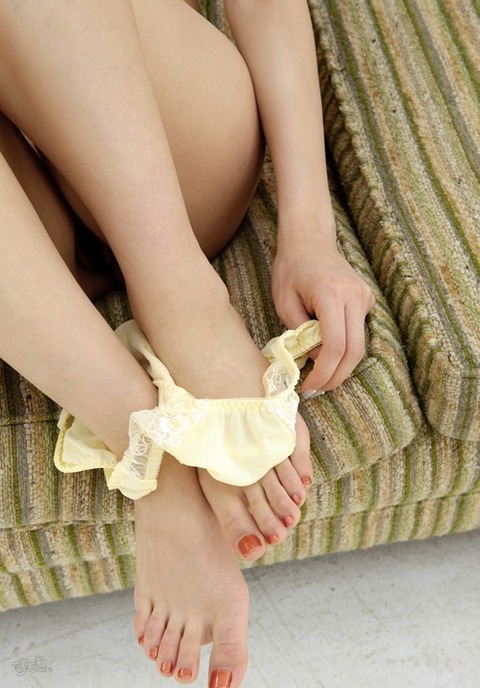
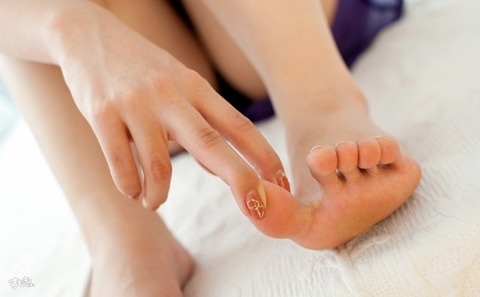
--- ## 3 composition ideas when including a ‘foot focus’ cut Based on the context of the original text, I will organize it to the level of “this direction is possible” without exaggeration. ### 1) Create a ‘variation’ by mixing **only one cut** If all the pictures are experimental, it may go against the purpose of the shop panel. Even in the original text, there is a nuance of “Wouldn’t it be good to have at least one cut?” - ✅ Basic composition (standard cut) + **1 variation cut** - ⚠️ Adjust the ratio so that the variation cut does not become the main one! [Reference image 3](/asset/499) --- ### 2) Determine the **main focus** instead of the face In a neck cut, it is difficult for the face to be the center of information. The more this is the case, the more the picture may “feel like it was just cut off.” However, this can be interpreted as an argument that the logic of the picture is created by shifting the focus to the feet/legs. - ✅ Focus: Feet/Legs - ✅ Face/Upper Body: **Intentionally Blurred (Bokeh)** - ⚠️ If the blur is too much, it can look like a ‘mistake photo’, so adjust the intensity! [Reference Image 4](/asset/512) --- ### 3) **Prior agreement** with the shop/manager is important In the original text, there are expressions such as “If you take pictures like this for the panel, you might get in trouble” and “A store manager with good sense might OK it.” In other words, the likes and dislikes of the results may depend on **not only the photographer’s skills but also the operator’s standards**. - ✅ Before the shoot: “After securing the basic cut, can I take one more **atmosphere cut**?” - ✅ When delivering: “This is a **eye-catching cut** without exposing the face” - ⚠️ Do not force it if rejected (maintaining the relationship is more important)! [Reference Image 5](/asset/513) --- ## Checklist: Check before/after application Experimental cuts can make a big difference in impression even with small differences. Below is a checklist to reduce the risks revealed in the original text. - ✅ Have you secured the **basic panel cut** (front/full body, etc.) first? - ✅ Have you **clearly adhered to** the conditions for not showing the face (neck cut, etc.)? - ✅ Have you adjusted the **overall tone** so that the foot-focused cut is not misunderstood as a ‘fetish’? - ⚠️ Are you prepared to explain the **intention (mood/variation)** of the cut in case of a response like “Who sees the feet?”
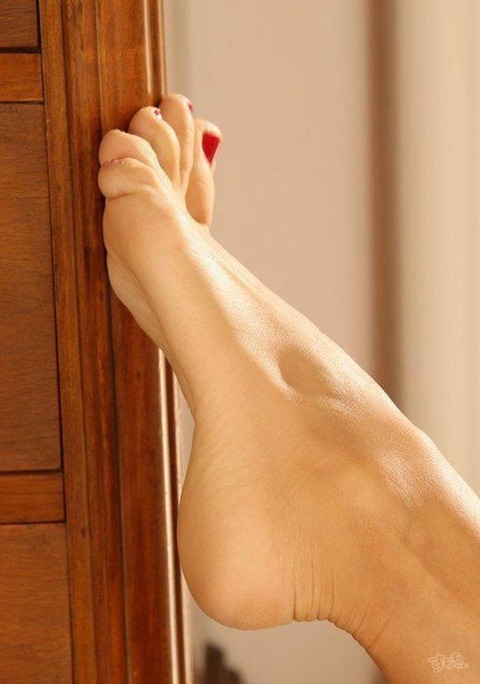
--- ## In cases like this, be especially careful. The original text includes provocative expressions such as ‘excitement point’, but from a practical shooting perspective, **purpose and usage** are more important. - ⚠️ When a shop strongly wants “body/full body information instead of face”: Foot focus cuts are only **auxiliary** - ⚠️ Panels where the shooting results are directly linked to sales/reservations: It is safe to **use after review** the experimental cuts
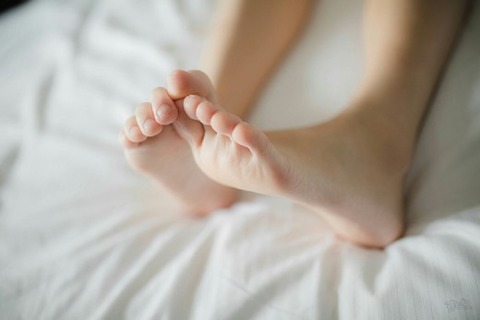
--- ## Summary: ‘Foot focus’ is not a bold technique, but if we organize it based on **gaze design** reviews/sources, the concern in face-hidden shooting is closer to “how to create a **beautiful and erotic atmosphere** even without a face.” As one of the solutions, **focusing on the feet** is introduced, and the opinion is given that “the atmosphere can change completely.” - 🔥 Point: **Focus rather than pose** changes the mood - ✅ Adoption may vary depending on the operator/shop's tendencies, so **communication is key** - ⚠️ Over-application may have the opposite effect, so it's safer to try **one-cut variations** first! [Reference Image 8](/asset/516)